
Career Spotlight: Dr. Jonathan Boyd, ESG Officer
February 20, 2026
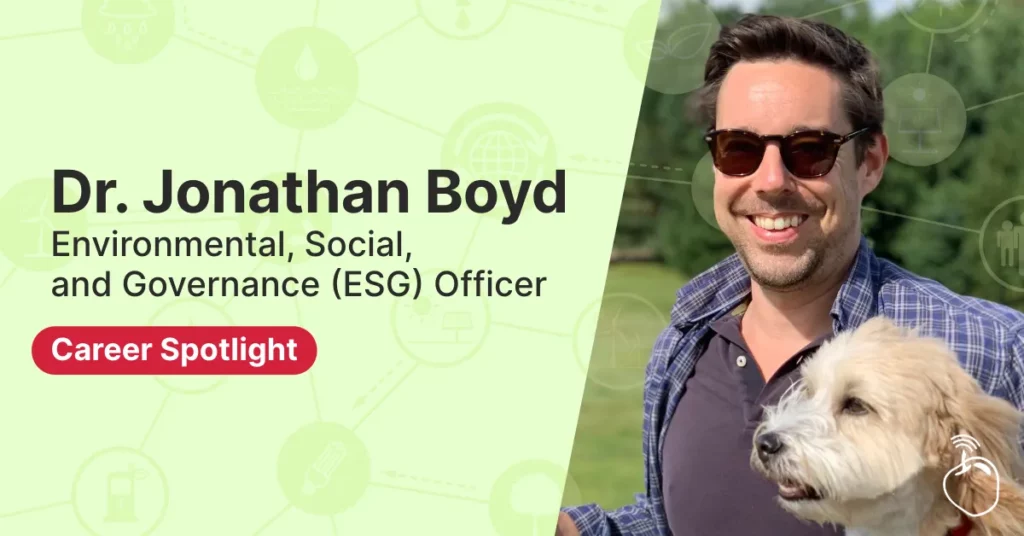
What if your job helped protect the planet while shaping how organizations make decisions?
An Environmental, Social, and Governance (ESG) officer does exactly that by blending science, politics, ethics, and real-world problem-solving. In this career spotlight, we explore how curiosity can turn big questions into a global career, and how students can start building those skills today.
What is an ESG officer?
An ESG officer is someone who asks big, meaningful questions.
- How do our decisions affect the planet?
- Who do they impact?
- And how can organizations do better?
For students interested in environmental issues, science, politics, and how the world works behind the scenes, ESG is a career that brings all of these interests together. ESG work blends research, data analysis, policy, ethics, and communication to help organizations understand and improve their environmental and social impact.
These questions are at the heart of Dr. Jonathan Boyd’s work, where political science, international relations, and sustainability meet in practical, real-world ways.
From Science to Global Politics
Dr. Boyd’s academic journey is a great example of how curiosity can open unexpected doors. As a teenager, he was deeply interested in biology and co-authored a scientific study published in an academic pharmacology journal before finishing high school. Science was his first academic passion.
Everything changed in his second year of university when a friend encouraged him to take an elective in political theory.
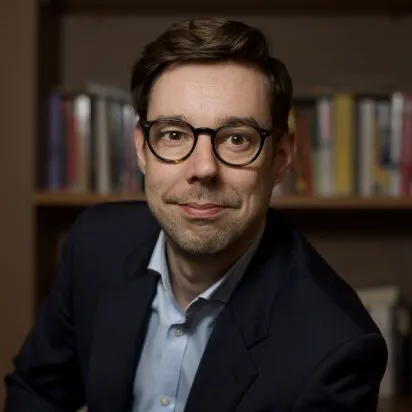
We studied thinkers like Plato, Machiavelli, and Hobbes, and I was immediately hooked. I knew that was what I wanted to focus on from that point on.”
That spark led Dr. Boyd toward political science and international relations, earning a Bachelor of Arts from McMaster University, a Master of Arts in Political Science from Western University, a Master’s degree in International Relations from the University of St. Andrews in the United Kingdom, and ultimately a PhD in International Relations from the University of St. Andrews.
Education that Builds
Although Dr. Boyd shifted away from science academically, it never truly left his work. Scientific thinking plays a major role in how he approaches sustainability: relying on data, systems, and evidence to address environmental challenges shaped by politics and policy.
Dr. Boyd works as an ESG Officer with TV3 Group in Lithuania, helping organizations track their environmental impact and tell their sustainability story clearly and responsibly. He also teaches as an Associate Professor at ISM University of Management and Economics in Lithuania and is an Adjunct Professor teaching Human Rights with the University of Connecticut’s London campus, bringing real-world global issues straight into the classroom.
Sustainability in a Global Context
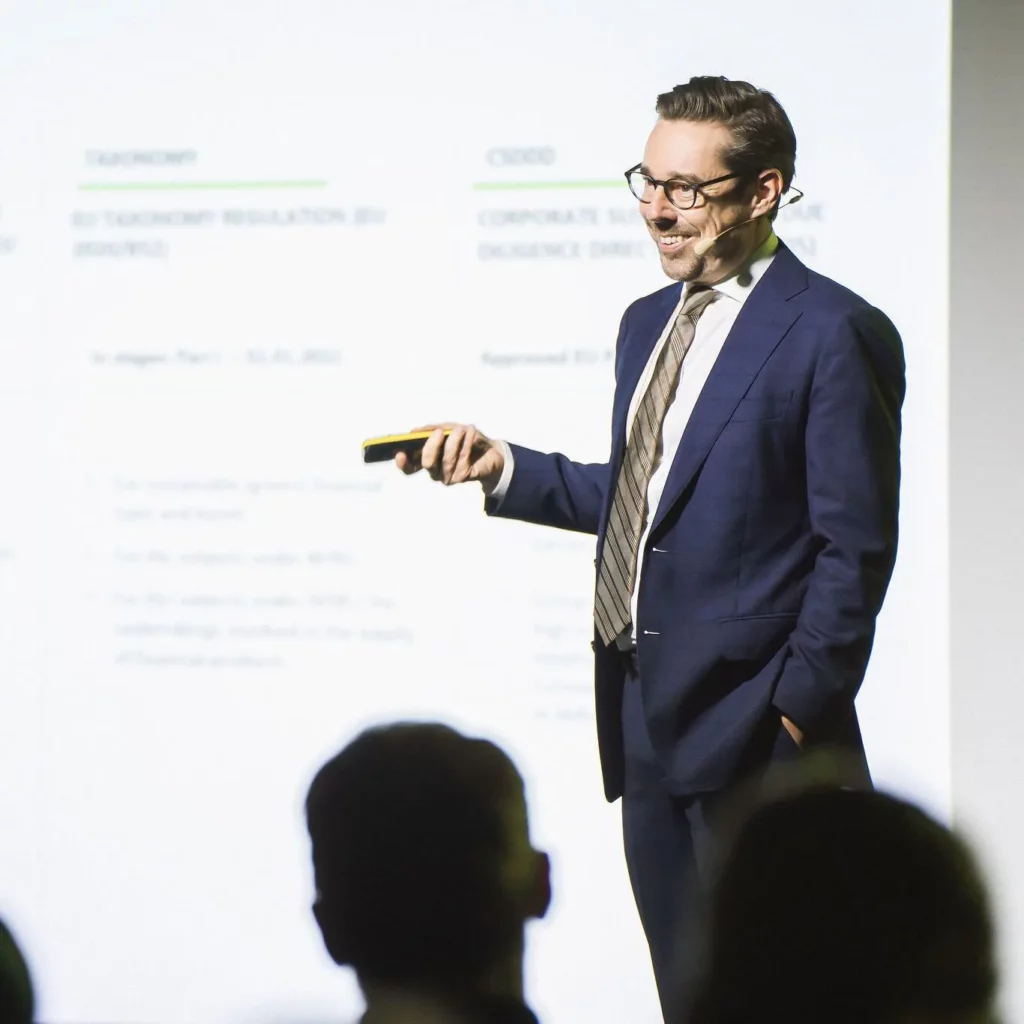
A major theme in Dr. Boyd’s work is how global politics shape environmental and economic progress. In the European Union, new regulations have required large companies to report on greenhouse gas emissions, pollution, waste, and water use. Dr. Boyd has helped organizations navigate these requirements and develop transparent, ethical sustainability systems.
His academic research reflects this same big-picture thinking. In his work on automation and the future of work, Dr. Boyd challenges narrow predictions that focus only on technology replacing jobs. Instead, he argues that technological change must be understood within a broader social, political, and economic context.
This perspective carries directly into ESG work. Sustainability is not just a technical challenge. It is shaped by politics, regulation, markets, and public expectations. Even when policies change, investors, employees, and consumers continue to push for transparency and accountability.
For students, the takeaway is powerful. Real progress rarely comes from one discipline alone. It happens where science, politics, economics, and ethics come together.
It is a difficult task, but also an exciting one for students who want to make a difference.”
A Message for Students
When asked what it takes to succeed in political science or international relations, Dr. Boyd doesn’t point to a single skill. He has seen confident speakers, strong writers, quiet thinkers, and students who struggled early on all find meaningful paths forward.
His career is a reminder that curiosity, flexibility, and interdisciplinary learning matter.
The skills students build today, including critical thinking, research, communication, and global awareness, can lead to opportunities they may not even be able to imagine yet.”
Fun Facts

When he’s not tackling big global questions, Dr. Boyd enjoys Christopher Nolan films and spending time on the golf course. He and his wife recently bought a home in Italy and so he is attempting to learn Italian, with plans to add skiing to his list of new skills!
If global issues, sustainability, and how decisions get made spark your curiosity, you’re already thinking like a future changemaker. Virtual High School can help. With flexible, student-centred courses in areas like Politics, Canadian History, World History, Economic Issues, and Writer’s Craft, VHS allows students to explore complex global ideas while building the skills that open doors to future careers.